
Overseeding Ryegrass on Louisiana Commercial Turf: Timing and Mower Setup
11/6/2026
By mid-fall, the bermudagrass on your commercial properties starts to slow down. A few weeks later, it turns tan and stays that way until spring. For a storefront, office park, or ball field, that brown patch can turn into a real problem. Overseeding with ryegrass fixes that. Ryegrass is a cool-season grass, so it grows while bermuda sleeps. Your turf stays green all winter, and it holds up better to foot traffic on fields and common areas. The tradeoff? You'll keep mowing through the winter.
Timing is where most overseeding jobs go right or wrong. In North and Central Louisiana, the best window is mid-fall. Our long, warm autumns make it easy to seed too early. Seed that goes down in September heat often loses the race to bermuda that's still growing.
In this guide, we'll walk you through how to get the timing right and how to set up your mower before and after seeding.
For ryegrass in North and Central Louisiana, the best time to overseed is mid to late October. That's when soil temperatures start dropping to around 70°F. At that point, ryegrass can sprout and bermuda starts to slow down.
LSU AgCenter recommends overseeding warm-season lawns in October or November. Mississippi State Extension says to seed once soil temperatures reach about 70°F, which usually happens around mid-October. North Louisiana follows a similar pattern.
Where you are matters too. Properties in Bossier, Union, and Morehouse parishes can often be seeded earlier in the window. In Rapides and Natchitoches parishes, you may be closer to late October or even early November. For the best results, check soil temperatures at your nearest LSU AgCenter weather station before you seed.
Seed too early, and warm weather keeps bermudagrass growing. It crowds out young ryegrass before it can get started. Early seeding in Louisiana also means more heat and humidity, which invites disease.
Seed too late, and cool soil slows germination. You'll head into December with a thin, patchy stand.
Getting it right in the fall also pays off in the spring. By late spring, a thick ryegrass stand competes with bermuda as it greens up. A clean fall start makes for an easier handoff.
Your mower does two jobs during overseeding. Before seeding, it opens up the bermuda so the seed can reach the soil. After the ryegrass comes up, it keeps young grass healthy while it fills in. Here's how to set it up for each stage.
Step 1: Sharpen and balance your blades.
Start with sharp blades. A clean cut is easier on turf, and it matters even more once young ryegrass is up. Balance blades after sharpening to reduce vibration. Plan to sharpen them again before your first ryegrass mow. For a full checklist, see our commercial mower maintenance guide.
Step 2: Lower the deck and mow the bermuda down.
Drop your cutting height below your normal summer setting. This opens the bermuda canopy so seeds can reach the soil. Don't scalp it down to bare dirt. For reference, LSU AgCenter lists common bermuda at 1¼ to 1½ inches and hybrid bermuda at ¾ to 1 inch for normal mowing. If you need to go lower, take it down over two passes a few days apart instead of one hard drop.
Step 3: Bag the clippings.
Clippings and debris left on the surface keep seeds from reaching the soil. Use a bagger to clear them off as you mow. John Deere ZTrak, QuikTrak, and walk-behind mowers all offer bagging options.
Step 4: Handle heavy thatch (if needed).
If the bermuda has a thick layer of thatch, it may need vertical mowing before you seed. This can be done with a verticutter, not a standard mower deck. Most well-kept commercial turf can skip this step.
Step 5: Give the seed time.
Once the seed is down, park the mower. Let seedlings take root before you mow again.
Step 6: Raise the deck for the first mow.
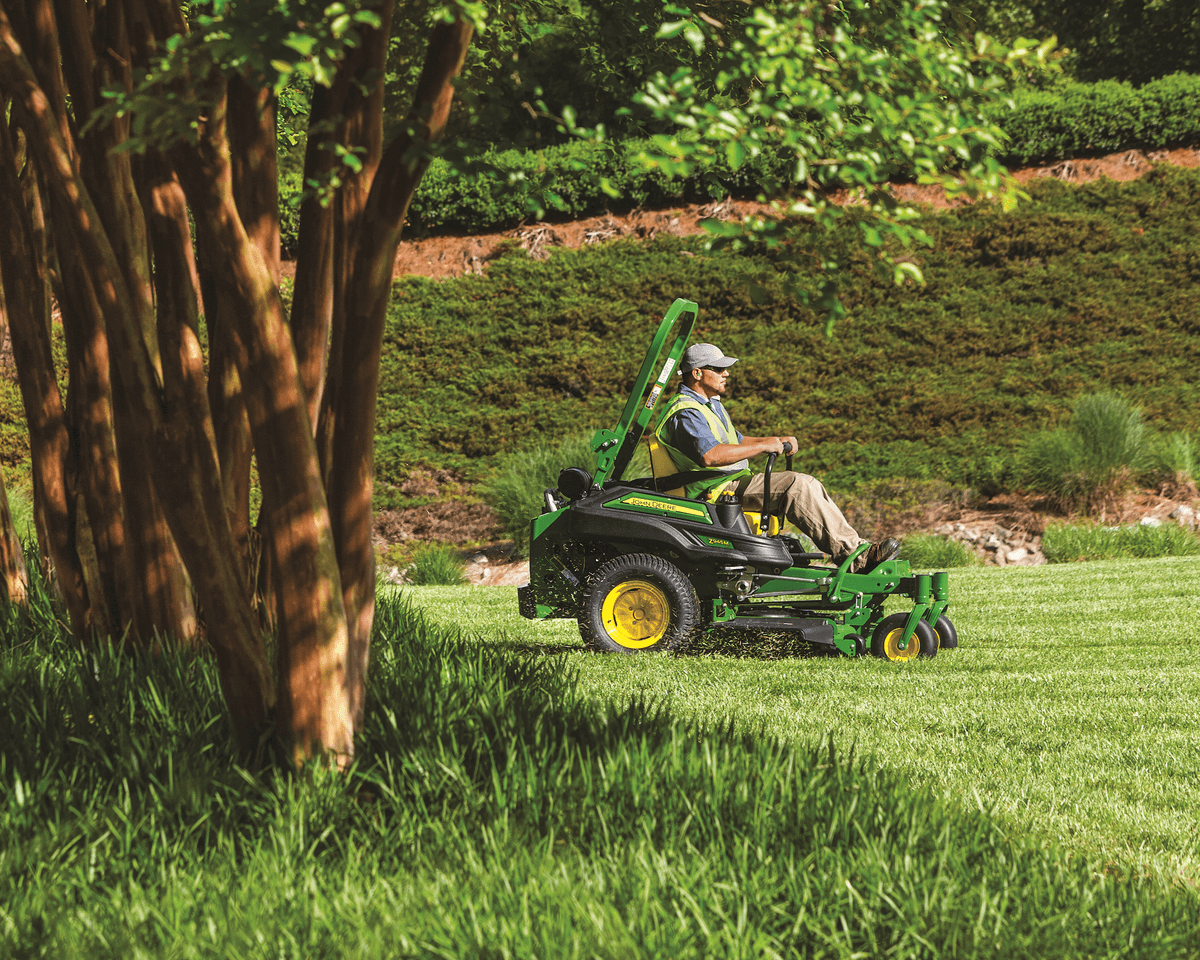
Wait until the ryegrass reaches about 2 inches tall. Then raise your deck to 1½ to 2 inches. Mow when the grass is dry so you don't pull up young plants. On a zero-turn, slow down and make wide, gentle turns. Tight pivots can tear up seedlings.
Step 7: Plan for spring transition.
When bermuda starts waking up in the spring, drop your ryegrass height to about 1 inch. This weakens the ryegrass and helps bermuda take back over. Just don't scalp the bermuda underneath, or green-up may be delayed.
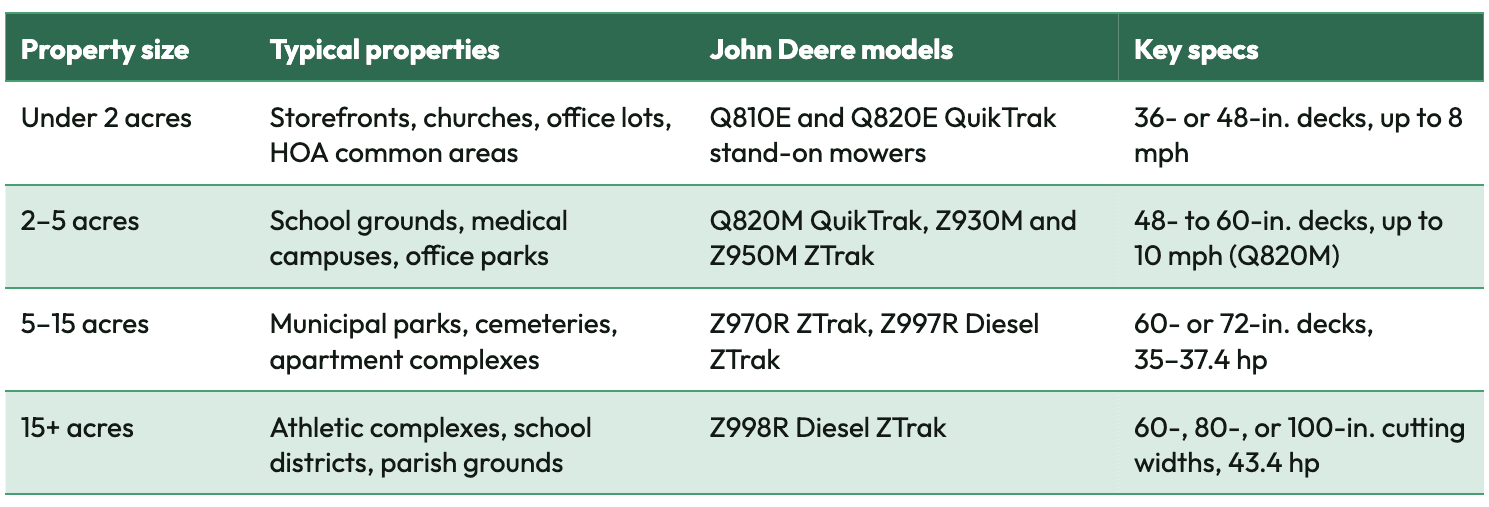
The right commercial mower comes down to how many acres you cut and how open your properties are. Use these tiers as a starting point. Then talk to our team about your routes.
Overseeding comes down to two things: good timing and the right mower setup. Seed in mid to late October. Mow low and bag before seeding. Then raise the deck and give the ryegrass time to fill in. Do that, and your commercial properties will stay green all winter.
Goldman Equipment's service team can sharpen blades and service decks before overseeding season starts. Stop by any of our 12 locations across North and Central Louisiana, or schedule service online.
Overseed ryegrass in North Louisiana in mid to late October, once soil temperatures drop to about 70°F. Seeding earlier gives bermuda the edge while it's still growing. Seeding later slows germination. For the best timing, check soil temperatures at your nearest LSU AgCenter weather station before you seed.
Mow bermuda lower than your normal summer height to open the canopy so seed can reach the soil. Don't scalp it down to bare dirt. If you need to drop a lot, do it over two passes a few days apart. Bag the clippings so they don't block seed-to-soil contact.
Wait until the ryegrass is about 2 inches tall before you mow. That gives seedlings time to take root. For the first mow, set the deck at 1½ to 2 inches, mow when the grass is dry, and make slow, wide turns on zero-turn mowers.
Perennial ryegrass is the better choice for most commercial properties. It has a finer texture, better winter color, and fewer seed stalks in the spring than annual ryegrass. That makes it a good fit for storefronts, office parks, and athletic fields where looks matter.
It depends on how many acres you mow per property. Stand-on mowers with 36- to 48-inch decks fit small, tight properties. Mid-size properties do well with 54- to 60-inch decks. For 15 or more acres of open turf, a wide-deck mower like the John Deere Z998R covers ground fast.