
Fertilizer Season Is Here: What North Louisiana Farmers Need to Know Before the First Application
4/16/2026
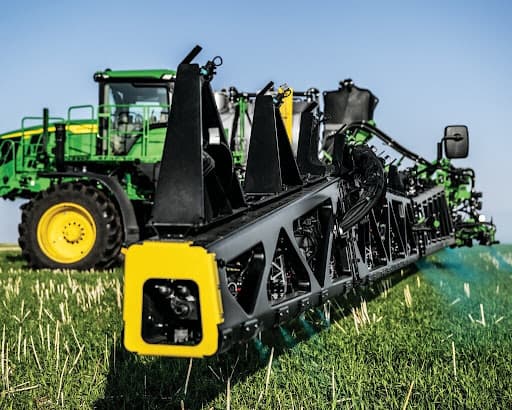
Spring is here, and planting season is right around the corner. It's about that time of year to start thinking about fertilizer — but is your field actually ready? North Louisiana farmers face plenty of pressure this time of year: tight schedules, unpredictable weather, and the urge to get nutrients down as soon as possible. But rushing that first pass can cost you more than it saves. Here's what to address before you roll.
The pressure to get ahead of planting season is real, but applying fertilizer before your crops or grasses are actively growing is a waste of money. Nutrients sitting on cold, dormant soil can volatilize or leach away before plants ever get the chance to use them. On top of that, early applications can give weeds a head start on your crop. Wait until soil temperatures are consistently rising and you're seeing active growth.
Louisiana note: Spring can feel warm early across North Louisiana, but a late cold snap isn't unusual. Don't let a few warm days push you out too soon.
Fertilizing without a soil test is essentially guessing. A routine test gives you accurate data on soil pH, phosphorus, potassium, calcium, magnesium, and more, so you know exactly what your soil needs before you spend on inputs.
Many North Louisiana soils, particularly the heavier clay-based ground common across the region, tend toward acidity. Acidic soil blocks your crops from absorbing nutrients properly, which means you could be applying fertilizer and getting a fraction of the return. Applying lime to correct your pH can make a significant difference without adding much to your input costs. Just keep in mind that lime should never be applied at the same time as ammonium-based fertilizers.
Plan to pull your samples in late winter or early spring so results are back before application season gets underway.
After intensive cutting, hay cropping, or a heavy production season, soils can become deficient in key nutrients like nitrogen, zinc, sulfur, and boron. Nitrogen is the most important and yield-limiting macronutrient for field crops — it drives amino acid production, chlorophyll, and energy transfer, and plants need more of it than any other nutrient.
Because nitrogen can be lost through leaching, volatilization, and denitrification, splitting your nitrogen applications across multiple timepoints is highly recommended rather than putting it all down at once. And always match your application rates to what the soil test calls for — over-applying doesn't improve yields, it just increases your input bill.
Don't let a surprise storm wash your inputs off the field. Apply fertilizer after heavy rain events, not before. Nutrients applied to saturated soil run off rather than being absorbed, taking your inputs into waterways instead of your crop.
Spring rains in North Louisiana can be heavy and fast-moving, so checking the forecast 48–72 hours ahead of a planned application run is a simple habit that can save you real money. Windy days are also worth watching for dry broadcast applications — high winds cause drift and uneven coverage that's hard to correct after the fact.
Ideal conditions: soil that has drained adequately, moderate temperatures, and a calm, dry window of at least 24–48 hours post-application.
A broadcast spreader distributes inputs like fertilizer, lime, and seed across a wide surface area in a single pass. The Frontier SS20B features a seamless conical polyethylene hopper that resists moisture and chemicals for long wear life, a standard fixed agitator to keep product flowing, a sealed heavy-duty gearbox, and 540-rpm PTO compatibility. It offers three swath spread patterns, and optional deflector shield kits let you control where material lands. Category 1 three-point hitch compatible, it pairs well with several John Deere compact tractor models.
Good fit for: Smaller operations, pasture fertilization, and applying lime
For row crop operations that need precise, efficient placement, nutrient applicators are the right tool. The 2510H features a single disk opener for accurate fertilizer placement with minimal soil disturbance, and can operate up to 10 mph — making it a strong choice for side-dressing right after planting without disrupting your stand. The 2530L offers a high-clearance design with heavy-duty colters for accurate nutrient placement, and its narrow transport width makes it easy to move between fields.
Good fit for: Side-dressing nitrogen on corn mid-season or liquid fertilizer applications during planting
When you're running a liquid fertilizer program, John Deere's 400 and 600 Series sprayers bring the tank capacity and boom width to cover ground quickly. ExactApply™ technology and variable rate capabilities keep your application rates accurate across the field, which matters when you're managing nitrogen by zone or working with prescription maps.
Good fit for: Large-scale liquid fertilizer programs and operations using variable rate application.
Before your first load goes in the hopper, run through these basics:
North Louisiana farmers should wait until soil temperatures are consistently rising and crops or grasses are showing active growth before applying fertilizer. Applying too early — before plants are out of dormancy — means nutrients can volatilize or leach away before the crop can use them, and early applications can also encourage weed germination ahead of your stand. A late cold snap is common across North Louisiana even after warm stretches, so patience in early spring pays off.
A soil test is the only reliable way to know what nutrients your soil actually needs before you spend money on inputs. Without one, you're essentially guessing — and over-applying fertilizer doesn't improve yields, it just increases your input costs. North Louisiana soils, especially the heavier clay-based ground common across the region, tend toward acidity. Soil that is too acidic blocks crops from absorbing nutrients properly, meaning the fertilizer you've already paid for goes to waste. A soil test identifies pH imbalances and deficiencies so you can correct them before the season starts.
John Deere offers several equipment options depending on operation size and application type. The Frontier SS20B Series Broadcast Spreader is well-suited for smaller acreage, pasture fertilization, and lime applications. For large row crop operations, the John Deere DS Series Dry Spinner Spreader handles up to 10-ton loads with spreading widths up to 105 feet and integrates with AutoTrac and Section Control for precision placement. The 2510H and 2530L Nutrient Applicators are designed for side-dressing nitrogen mid-season or liquid fertilizer applications during planting. For liquid programs using UAN or similar products, the John Deere 400 and 600 Series self-propelled sprayers with ExactApply technology provide accurate variable-rate application across large acreage.
Goldman Equipment carries John Deere fertilizer spreaders, nutrient applicators, and self-propelled sprayers across 11 locations throughout North and Central Louisiana, including Alexandria, Natchitoches, Bossier City, West Monroe, Farmerville, Rayville, Winnsboro, Tallulah, Mer Rouge, Ferriday, and Newellton. As an authorized John Deere dealer, Goldman Equipment offers equipment sales, parts, service, and financing to help farmers across the region get the right setup for their operation.
A little planning before your first application goes a long way toward protecting your inputs and your yield. Get your soil tested, wait for the right timing, use properly calibrated equipment, and keep an eye on the forecast. That's the foundation of a fertilizer program that actually pays off.
Goldman Equipment's team across North and Central Louisiana is here to help you find the right spreader, applicator, or sprayer for your operation — and keep it running all season. Stop by any of our locations in Alexandria, Natchitoches, Bossier City, West Monroe, or anywhere across the region.